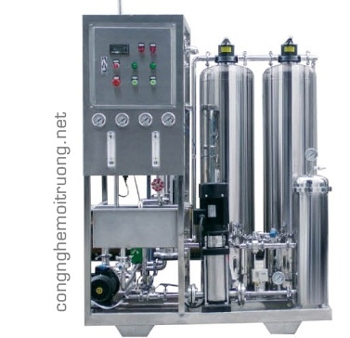
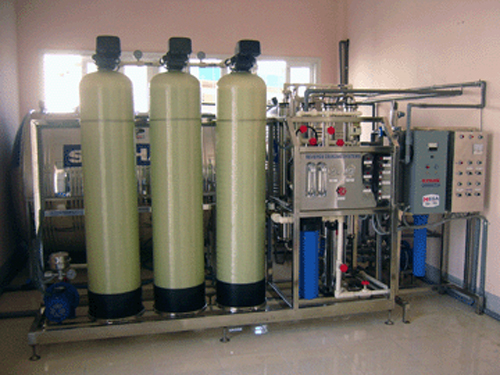
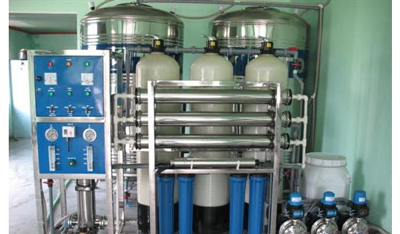
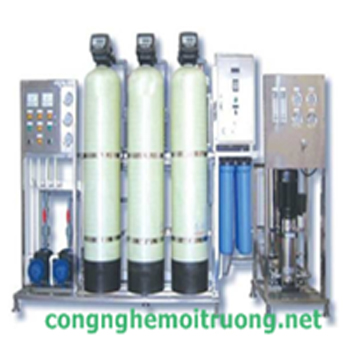
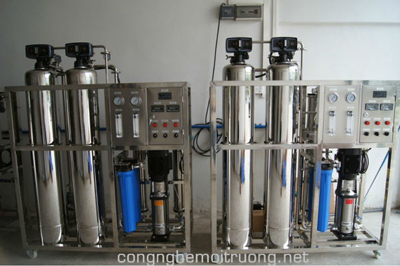
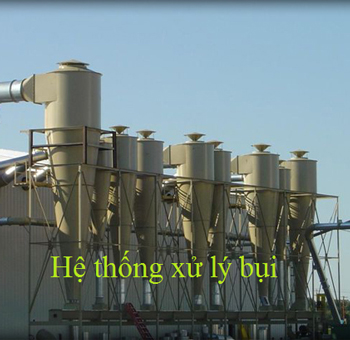
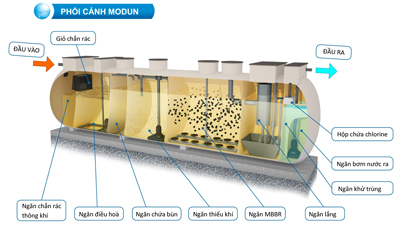
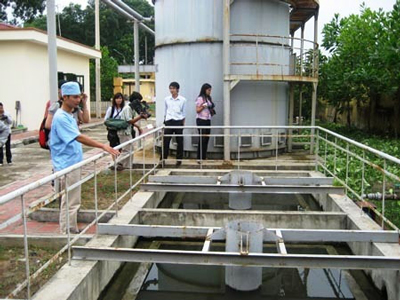
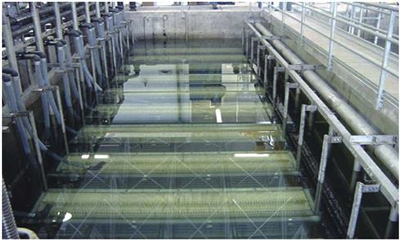
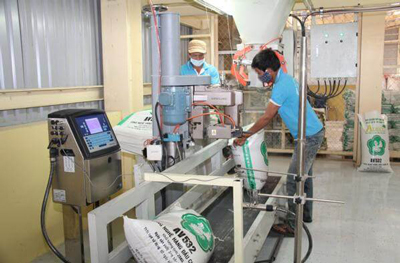
BOTTLED DRINKING WATER TREATING LINE
* Principle of operation
The water source is mainly contaminated with heavy metal ions such as iron, manganese, calcium ... and the positive cations, the source water is not anion-contaminated. Therefore, anion treatment technology is chosen. Ion exchange is an exchange process based on the chemical interaction between liquid phase ions and solid phase ions. These are the potential reactions between liquid phase ions and solid phase ions. These liquid-phase resins will absorb ions from the water, while ions in the water will replace the ions on the ion exchange resins. The process depends on each ion exchange resin. The ion exchange state consists of 2 main states:
+ Dynamic status: The plastic layer is continuously exchanged during transportation and continuous regeneration, the system operates continuously.
+ Static state: Exchangeable plastic layer stands still during the operation of the system, the resin is regenerated intermittently, the mode operates intermittently
* Treating process:
- First, the source water is pumped to the raw water tank. The water is then pumped through coal filters and ion exchange tanks to treat the contaminants present in the water.
- Coal filter works to remove suspended impurities, odors, colors, absorb trace elements, toxins, ... in water. The filtration performance of coal depends on the nature and duration of exposure of water and coal.
- Ion exchange tank is responsible for removing cations in the water, softening water ... protecting the RO water filtration system of the production line.
Water after going through the ion exchange tank is stored in intermediate clean water tanks. The water in the intermediate clean water tank is pumped through a fine filtration tank to remove impurities of very small size in the water (5 µm). The purifying filter is responsible for protecting against RO clogging. - This system uses reverse osmosis technology to eliminate most bacteria and viruses present in the water. Osmosis is the phenomenon of water moving from a place of low salt concentration to a higher concentration of salt to create equilibrium in solution. In reverse osmosis, water will travel from the high salt concentration to the place where there is no or less salt thanks to the effect of external forces, this force makes the water penetrate through a special membrane. This is a specialized film that can withstand high pressure, thin films, on films with holes with very small size (0.001 micro). The membrane is made of cellulose acette, polyamide.
- Water after RO system is stored in clean water tank. In this tank, to destroy microorganisms in the phenomenon of reinfection when storing water in the tank, ozone gas is supplied to the tank to disinfect water. At the same time, the output of the water tank, UV system is installed on the pipe to kill bacteria, viruses in water due to the phenomenon of water re-microorganism reinfection on the pipe. Water after going through UV system is pumped through microfiltration system to filter bacteria.
* Specifciations
|
User
|
Factory producing bottled water, producing ice
|
|
Wattage
|
1.5 – 50 m3/h.
|
|
Uses
|
Producing bottled water, producing ice
|
|
Components, equipment components
|
5µm fine filter, blanket, RO membrane, membrane cleaning system, 2-stage booster pump, flowmeter, control electrical cabinet, TDS controller, stainless steel frame, ..
|
|
Advantges
|
Easy to install, move
|
|
Input water source
|
Raw water, well water, ..
|
|
TDS source
|
<1000 ppm
|
|
Desalination, bacteria killing
|
>96%, >99%
|
|
Output quality
|
Meet the bottled drinking water standards of the Ministry of Health
|
|
Price
|
Contact for details
|