HOSPITAL WASTEWATER TREATMENT SYSTEM
* Treatment procedure:
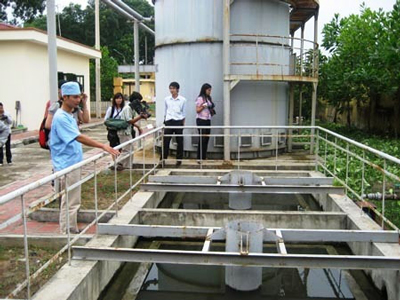
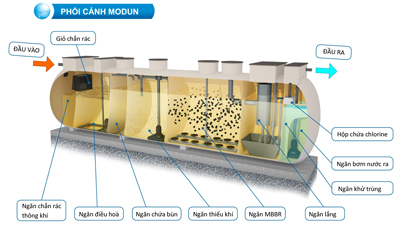
Step 1: Hospital wastewater is concentrated in a system leading to the collection tank at the collection tank with trash rack to remove floating objects, organic substances of large size such as tree branches, plastic bags, and ice. brush, .. to avoid pump congestion.
Step 2: Next, the waste water is pumped to regulate the flow tank to stabilize the flow and the works behind. There is a layout of aeration system to avoid anaerobic decomposition causing odors and loss of aesthetic beauty of the area. Waste water from regulating tank is continuously pumped through Anoxic tank to decompose nitrogen-containing compounds by circulating flow.
Step 3: Water flow continues through the gas tank using media to enhance the decomposition of organic compounds. Here aerobic bacteria in the form of biomass sticking to the substrate with high density will decompose the organic matter in waste water under continuous aeration conditions.
Step 4: After that, the waste water is passed through the lamem sedimentation tank in the sedimentation tank moving upwards from the bottom according to the lamen deposition plates designed inclined 600, during the process of moving sediment (precipitate or cotton settling) ) will collide with each other and adhere to the surface of the lamen plate. When the cotton adhesives together on the surface of the lamen plate heavy enough and wins against the thrust of the moving water, the precipitated cotton will slide down in the opposite direction and fall to the bottom of the sedimentation tank, from there periodically. let go.
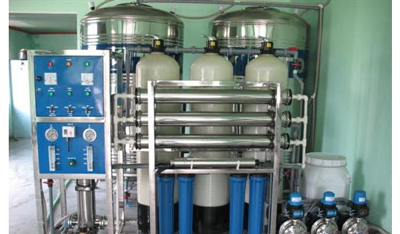
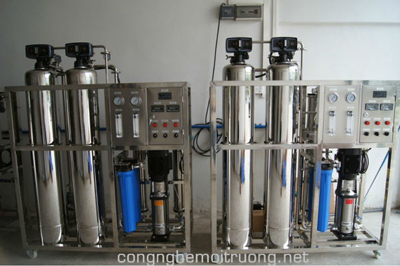
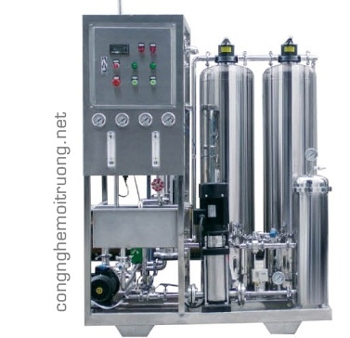
Step 5: Waste water before being discharged into receiving sources must go through disinfection tanks to destroy dangerous pathogens to ensure safety. Wastewater after pretreatment, brought to the pressure filter tank for thorough treatment, insoluble and soluble solids are retained when water passes through the filter material layer, the water becomes cleaner after passing system.
After each filtration cycle, the residue adheres to the surface of the filter media in the top layers and they are removed by backwashing, the residue is removed and the friction particles clean on their own. Their surface, contaminated water, is removed from the tank by a separate waste stream.