TELESCOPIC HYDRAULIC CYLINDER
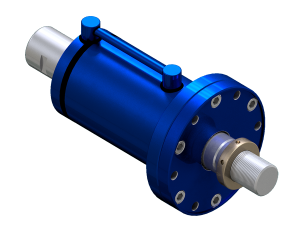
A telescopic hydraulic cylinder (also called a multi-stage cylinder) is a specialized type of cylinder with multiple nested sliding tubes, resembling a telescope, hence the name "telescopic." This design allows for an exceptionally long stroke while maintaining a compact retracted length.
Key Features of Telescopic Hydraulic Cylinders
- Multi-Stage Design (2 to 6 stages or more):
• Each stage consists of a hollow tube with varying diameters, nested inside one another.
• The innermost stage is the smallest, while the outermost is the largest.
- Long Stroke with Compact Retraction:
• Ideal for applications requiring high extension but limited installation space.
- Sequential Stage Operation:
• When extending, each stage deploys in order, from smallest to largest.
• When retracting, stages fold back in reverse order.
- Variable Force per Stage:
• The first stage delivers the highest force, while subsequent stages decrease in force due to piston area changes.
Applications of Telescopic Hydraulic Cylinders
Telescopic hydraulic cylinders are highly versatile, especially in situations requiring long strokes within confined spaces. Below are some of the most common real-world applications:
Dump Trucks (Tipper Trucks)
• The most widespread use of telescopic cylinders.
• Lifts the truck bed to unload materials (soil, rocks, sand, etc.).
• Long stroke ensures high lifting and complete material discharge.
• Compact retraction minimizes space usage on the truck frame.
Aerial Work Platforms, Cranes, and Lifts
• Used in hydraulic lifts, aerial work platforms, fire trucks, and rescue vehicles.
• Provides significant height extension while maintaining a small footprint when retracted.
Industrial Machinery & Specialized Equipment
• Found in presses, material stretching machines, and multi-stage pushing applications.
• Preferred when a single-stage cylinder cannot meet long-stroke requirements due to space constraints.
Marine & Port Equipment
• Used in ship deck lifts, marine cranes, and container handling systems.
• Particularly useful for lifting heavy loads in tight spaces.
Agricultural & Forestry Machinery
• Examples: Harvesters, crop transporters, and logging equipment.
• Enables adjustable working extensions for different operational needs.
Automated Mechanical Systems
• Used in production lines where objects must be pushed far from their initial position within a compact machine frame.
• Solves the challenge of achieving a long stroke with a short cylinder body.


.png)
.png)
