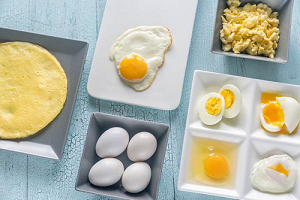
It can be said that eggs are one of the best and most nutritious foods that humans have after breast milk. Eggs play a big role in the cuisine of all countries, feeding billions of people around the world every day, providing an abundant amount of protein to help to develop physical, mental and human brains.
1. Health benefits
According to scientists, eggs are considered a "superfood" because it contains nutrients necessary for healthy functioning of the body.
– Protein: 6 grams
– Healthy fats: 5 grams
– Calories: 77 calories
– Vitamin A: 6% of RDA (*)
– Folate: 5% of RDA
– Vitamin B5: 7% RDA
– Vitamin B12: 9% of RDA
– Vitamin B2: 15% of RDA
– Phosphorus: 9% RDA
– Selenium: 22% of the RDA.
In addition, eggs also contain large amounts of vitamins D, E, K, B6, calcium and zinc.
➢ Eggs are good for heart: Eggs increase levels of good cholesterol, HDL, which reduces the risk of heart disease and stroke
➢ Eggs are good for the brain: Because eggs contain a lot of choline compounds, this nutrient will promote brain health.
➢ Eggs are good for eyes: One egg contains lutein and zeaxanthin, which are antioxidants, which may help to reduce the risk of macular degeneration and cataracts. In addition, egg yolks are rich in zeaxanthin and lutein, which are good for the eyes.
➢ Increase muscle mass: Eggs are a great source of high-quality protein and essential amino acids for building strong muscles and bones.
➢ Weight loss: A low-calorie, high-protein diet will help you to feel full for longer, have enough energy for a working day without having to eat more other foods.
2. Which poultry eggs are the most nutritious? 2.1 Chicken eggs
Chicken eggs are the most popular and widely consumed eggs today. Chicken eggs provide the body with a valuable source of nutrients. Each egg also contains about 11.6g of fat, mainly concentrated in the yolk and 12.7g of protein. There are also many other substances such as potassium, sodium, magnesium, phosphorus, iron and vitamins A, B2, B6, D, E. But they do not contain much calcium, so calcium must be added from milk.
2.2 Duck eggs
Duck eggs carry a little more nutrition than chicken eggs, because their size is usually larger than chicken eggs. Duck eggs contain many vitamin B complex compounds, are high in protein, calcium, iron, potassium and many useful minerals.
2.3 Quail eggs
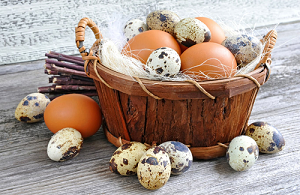
Compared with chicken and duck eggs, quail eggs are smaller in size but have the highest and best nutrient content. In addition, quail eggs are less likely to cause allergies, so they are very suitable for children under 6 years old and are also beneficial for childrens brain development.
2.4 Century eggs
Century eggs are made from duck eggs, undergoing incubation for 2-3 months to give birth to a delicious, fleshy, fatty egg. Century eggs are good for breathing, promote the immune system, increase red blood cells and prevent lung diseases and respiratory infections.
2.5 Salted eggs
Salted eggs gradually become a familiar dish of everyone today, salted eggs are considered the most calcium-containing of all eggs. It can also help prevent cancer, improve brain and eye health, and improve immune systems and liver.
3. Notes when choosing, preserving and using poultry eggs
≫ Should buy eggs at supermarkets or large, reputable egg suppliers. Packaged eggs must meet the regulations on labels, full of information: Name of establishment, name of product, production date, expiry date, storage temperature.
≫ Should choose eggs with a rough surface, clean, not cracked, not clinging to mud. When examining eggs under light or sunlight, if the small air chamber is < 1cm in diameter, the yolk is round and completely located in the middle to ensure new eggs.
≫ Do not choose eggs whose shell is too smooth, has black dots, is moldy due to moisture or makes noise when gently shaking the egg.
≫ Poultry eggs should be stored in the refrigerator. Before storing eggs in the refrigerator, use a damp cloth to wipe the surface of the eggshells to avoid cross-contamination in the refrigerator. Eggs stored in the refrigerator should only last for 3-5 weeks. Eggs that have been taken out of the refrigerator can be used within 2 hours, if left for a long time, they will not be used.
≫ According to experts, eating eggs in moderation will not affect the cholesterol content of the heart or stroke. But if you abuse too many eggs, it will lead to an increased risk of cirrhosis, obesity, high blood pressure, etc
Should there be any further inquiries, please do not hesitate to contact us!
Other Products from Thanh Nam Agricultural Food Joint Stock Company
Things To Know About Poultry Eggs is a product offered by Thanh Nam Agricultural Food Joint Stock Company, a verified Vietnamese manufacturer based in Ho Chi Minh City. Contact the supplier directly for specifications, pricing, and trade inquiries.
Where is Things To Know About Poultry Eggs made?
Things To Know About Poultry Eggs is made in Vietnam. Thanh Nam Agricultural Food Joint Stock Company supplies this product to international buyers and FDI enterprises sourcing from Vietnam.
How can I contact Thanh Nam Agricultural Food Joint Stock Company about Things To Know About Poultry Eggs?
You can contact Thanh Nam Agricultural Food Joint Stock Company directly via the contact details on this page (phone +84 971001003), or through their full company profile on Yellow Pages Vietnam. Bilingual (English / Vietnamese) inquiries are welcome.
What is the minimum order quantity for Things To Know About Poultry Eggs?
The minimum order quantity (MOQ) for Things To Know About Poultry Eggs is Contact for details. Contact the supplier to confirm current terms, lead time, and availability.
Run a business in Vietnam?
Get found by international buyers — list your business free in 2 minutes.