ESD THERMOFORMED PLASTIC TRAYS FOR ELECTRONIC COMPONENT PROTECTION
ESD thermoformed plastic trays provide dedicated compartments for holding, positioning and protecting electronic components during storage, assembly and transportation. Designed for applications requiring electrostatic discharge (ESD) control, these trays help organize sensitive components and reduce unwanted movement during handling. They are suitable for electronic manufacturing operations involving ICs, semiconductor chips, printed circuit boards (PCBs), sensors and other electronic parts.
1. What Are ESD Thermoformed Plastic Trays?
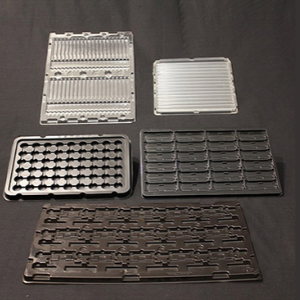
ESD thermoformed plastic trays are packaging solutions with molded cavities designed to accommodate specific component shapes. Their electrostatic control properties help manage electrical charge during component handling and movement between production stages.
Electronic components such as integrated circuits (ICs), semiconductor chips, PCBs and sensors can be sensitive to electrostatic discharge. Charge generated through friction or contact with other surfaces may affect sensitive electronic structures. ESD trays help manage this risk while keeping components organized in individual compartments.
These trays support several operational requirements, including:
- Packaging and handover of electronic components.
- Storage in production and assembly areas.
- Transfer of components between manufacturing stages.
- Component feeding for automated pick-and-place systems.
The tray cavity layout can be designed around component geometry to support organized handling and positioning.
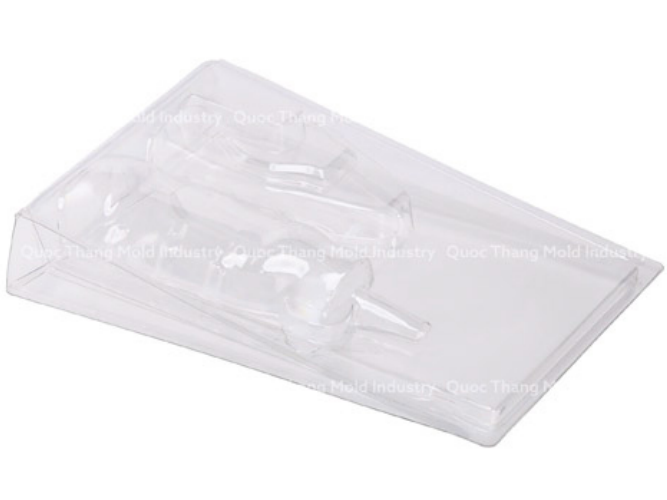
ESD thermoformed plastic tray for holding and protecting electronic components
2. ESD Protection Levels and Surface Resistivity
ESD plastic trays can be classified into three categories according to their surface resistivity. Each category offers different electrical properties and is suited to different electrostatic control requirements.
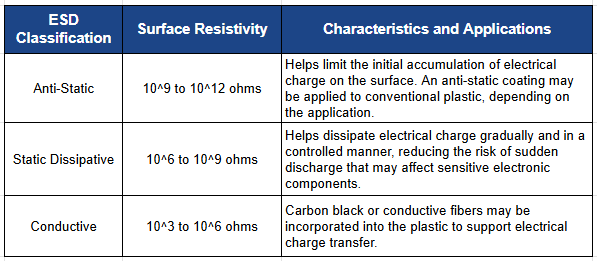
Choosing an appropriate resistivity range depends on component sensitivity, handling procedures and the electrostatic control requirements of the production environment. The required electrical properties should be confirmed for the specific tray design and material.
3. Common Materials for ESD Thermoformed Trays
Material choice affects tray rigidity, impact resistance and suitability for different operating conditions. Three common material groups are PS, PET and PP with ESD properties.
- ESD Polystyrene (PS): PS offers high rigidity, a smooth surface and good shape retention. Black PS incorporating carbon fibers can be used for trays holding chips, small circuit boards and components that require accurate positioning in automated handling systems.
- ESD Polyethylene Terephthalate (PET): PET offers flexibility and toughness, helping reduce the risk of cracking or breakage during transportation and movement between production stages. It is suitable for applications where handling durability is an important consideration.
- ESD Polypropylene (PP): PP provides chemical resistance and can offer higher heat resistance in suitable applications. Depending on the material grade and operating conditions, ESD PP trays may be considered for component drying or processes involving elevated temperatures.
The appropriate material depends on the component dimensions, handling method, chemical exposure and operating temperature. Material suitability should be assessed against the requirements of each application.
4. Applications in Electronics Manufacturing and Packaging
ESD thermoformed plastic trays combine component organization with electrostatic control, making them useful across several stages of electronics manufacturing.
- Electronic assembly lines: Individual cavities keep components organized and support efficient picking and placement.
- Chip and circuit board storage: Separate compartments help limit unwanted movement and physical contact between parts.
- Automated pick-and-place systems: Cavities shaped around component geometry can support consistent positioning for robotic handling.
- Packaging and transportation: Trays help secure components during internal transfers and shipment-related handling.
- Heat-related production processes: ESD PP trays may suit component drying or other elevated-temperature operations when the material and tray specifications meet the required conditions.
For automated operations, cavity geometry and dimensional accuracy should match the component and equipment requirements. Tray compatibility, stacking performance and handling tolerances depend on the specific design.
5. Custom Cavity Design and Space-Efficient Handling
Electronic components vary in shape, dimensions and handling requirements. Cavities designed around individual component profiles help provide a suitable fit, reduce unintended movement and support consistent handling throughout the production process.
Tray layouts can also accommodate stacking or nesting where the design allows. These configurations can help optimize storage space and transportation efficiency. The appropriate layout depends on component geometry, tray dimensions and handling requirements.
When planning a tray specification, buyers should consider:
- Component dimensions and cavity configuration.
- Required electrostatic control properties.
- Material rigidity and impact resistance.
- Compatibility with manual or automated handling.
- Stacking or nesting requirements.
- Operating temperature and environmental conditions.
Confirming these requirements before production helps align tray design with the intended packaging and manufacturing workflow.
6. Quoc Thang ESD Thermoformed Plastic Trays for Electronics Applications
Quoc Thang Model Industry Company Limited serves the thermoformed plastic packaging segment, including ESD trays for electronic components. These trays support component organization, positioning and protection during storage, assembly and transportation.
Material choice, electrostatic control requirements and cavity geometry are important considerations when matching a tray to an electronics manufacturing application. The appropriate configuration depends on the components being handled and the operating conditions of each production stage.
Quoc Thang Model Industry Company Limited offers ESD thermoformed plastic trays for electronic component packaging and handling applications. Buyers can discuss their component dimensions, cavity layout, material preferences and electrostatic control requirements to determine a suitable tray configuration.
Contact Quoc Thang to discuss your ESD packaging requirements and explore tray solutions for your electronics manufacturing workflow.