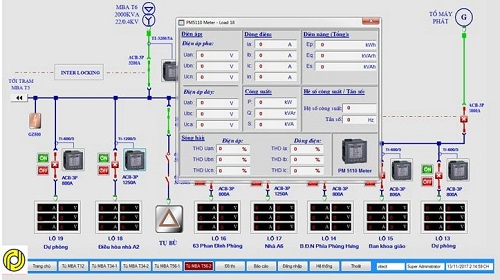
MES SYSTEM
1. Introduction
♣ Manufacturing Execution System - MES is an information system to connect, monitor and control complex production and data systems in factories. The main goal of the MES is to ensure the efficient implementation of production activities and to improve labor productivity.
♣ The MES system will track and collect accurate data on the complete production cycle from order issuance to product delivery to sales.
♣ The MES system helps to collect data about product subsystems, performance, traceability, raw material management and work in progress (WIP) and other plant operations as they occur. These data allow owners to understand the factory`s current production status and to better optimize the production process.
2. Benefit
♣ Short-term benefits: Increases efficiency and reduces costs
• Reduce production cycle time
• Reduce order time
• Reduce direct labor costs
• Reduce data entry time
• Reduce or eliminate paperwork
• Reduce work in stock (WIP)
• Increase machine usage
♣ Long-term benefits: Improve overall production processes
• Increase customer satisfaction
• Improve regulatory compliance
• Increase ability to adapt to market changes
• Improve supply chain visibility
3. When do businesses need to apply MES system?
♣ In today`s competitive global market, production is increasingly facing many challenges. If you are moving towards a more competitive and smarter manufacturing process, in which processes must be precisely controlled, with time and visibility to manage production operations with accurate instructions, real-time data MES is exactly what you need.
♣ Specifically, manufacturing should use MES if you have troubles in any of the following areas:
• Information latency: Receiving data too late to provide a useful analysis
• Problems with material traceability
• Too many risks and too many errors due to manual process
• Lack of a unified version to control information in factories, etc
If you want to get any further information, please don’t hesitate to contact!