AUBOT AGV T500 – 500 KG AUTOMATED TUGGER ROBOT
The AUBOT AGV T500 is an automated tugger robot designed to tow material carts between warehouses, workstations and production areas. With a maximum towing capacity of 500 kg and magnetic line navigation, it supports automated internal material transport in manufacturing facilities, warehouses and logistics operations. Its route-following capabilities and fleet management integration options make it suitable for businesses seeking to streamline repetitive cart transportation.
1. AGV T500 for Automated Material Transport
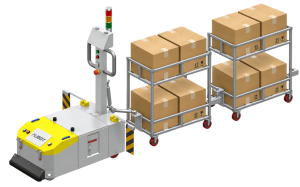
- The AUBOT AGV T500 is a tugger automated guided vehicle designed to tow carts along predefined routes. Rather than carrying goods directly on its own platform, the robot moves compatible carts between designated locations, supporting material replenishment and internal logistics workflows.
- Typical tasks include transporting materials from storage areas to workstations, moving components and work-in-progress between production stages, and transferring goods between manufacturing areas and finished-goods warehouses.
- With a maximum towing capacity of 500 kg, the AGV T500 is designed for workflows that involve frequent movement of loaded carts. Automating these repetitive transport tasks can help reduce manual pushing and pulling while supporting a more organized flow of materials across production and logistics areas.
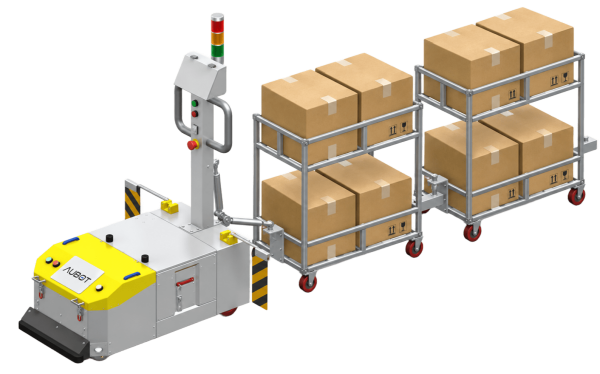
AUBOT AGV T500 500 kg automated tugger robot for material transport
2. Key Features and Technical Specifications
The AGV T500 combines automated towing, magnetic line navigation and fleet coordination capabilities for internal material handling.
✢ Main Operating Features
- Maximum towing capacity: Up to 500 kg for moving compatible material carts.
- Magnetic line navigation: Follows a magnetic guidance path established for the operating environment.
- Wireless fleet communication: AGVs can communicate wirelessly to support traffic coordination and reduce route conflicts.
- Extended operating time: Supports at least eight hours of operation per charge, based on the product specifications.
- Safety features: Equipped with laser sensors, collision sensors, an emergency stop button, and visual and audible alarms.
- Fleet management integration: Can be integrated with a Fleet Management System (FMS) to support coordination of AGV operations.
✢ Technical Specifications
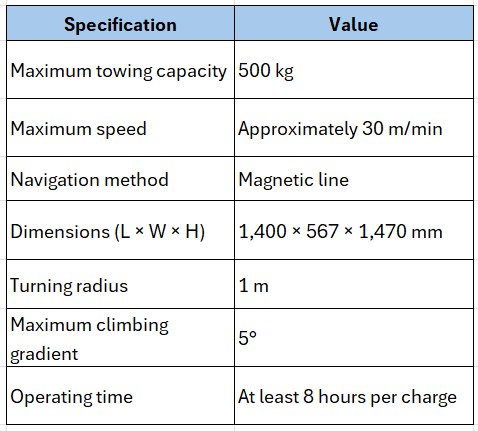
These specifications provide a starting point for assessing the AGV T500s suitability for a particular material transport workflow. Before deployment, businesses should evaluate cart loads, route geometry, turning clearance, floor gradients and operating schedules.
3. Applications in Manufacturing and Warehouse Logistics
The AGV T500 is suited to operations that require material carts to move repeatedly between designated functional areas. Its towing configuration supports workflows in which goods are transported using carts rather than loaded directly onto the robot.
✢ Manufacturing and Assembly
- Manufacturing facilities can use the AGV T500 to tow material carts from storage areas to production stations. It can also support the movement of components, supplies and work-in-progress between assembly stages, helping organize internal material replenishment.
✢ Electronics Manufacturing
- In electronics production, the robot can support cart-based transportation of components and work-in-progress between designated process areas. The route layout and cart configuration should be matched to the facilitys production workflow.
✢ Warehousing and Logistics
- The AGV T500 can transport carts between production areas, storage locations and finished-goods warehouses. Magnetic line guidance supports movement along predefined routes, making it relevant to operations with recurring internal transport requirements.
✢ FMCG and Food Production
- Facilities handling fast-moving consumer goods (FMCG) can use a tugger AGV to move carts carrying materials or packaging supplies to production and packing areas. Suitability depends on the operating environment, cart design and route requirements.
✢ Pharmaceutical and Medical Device Manufacturing
- The robot can support the movement of material carts between designated functional areas in pharmaceutical and medical device facilities. Site-specific requirements, including route layout and operational conditions, should be assessed before implementation.
- The AGV T500 is particularly relevant to businesses seeking to automate repetitive cart movements along planned routes. Selecting the right configuration requires checking the total towed load, turning radius, floor gradient and compatibility with the intended transport path.
4. AGV T500 Integration and Deployment Support
AUBOT provides automation and robotics solutions for industrial and logistics applications. Deployment of an AGV-based transport system may involve assessing the operating environment, defining routes and coordinating the robot with existing material handling processes.
✢ The potential implementation scope includes:
- Site assessment and consultation: Reviewing the facility layout, transport requirements and proposed operating routes.
- Route planning: Defining a magnetic guidance path based on internal material movement.
- Fleet management integration: Assessing connectivity with a Fleet Management System (FMS) for coordinated AGV operations.
- Installation and operator training: Supporting setup, trial operation and operator familiarization.
- Technical support: Maintenance and spare parts can be discussed under the applicable service arrangement.
The implementation approach should reflect the facilitys layout, cart specifications, required transport frequency and fleet coordination needs. Where FMS integration is required, the interface and operating requirements should be confirmed during project planning.
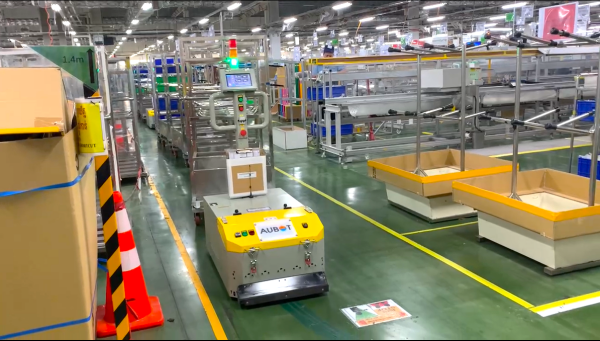
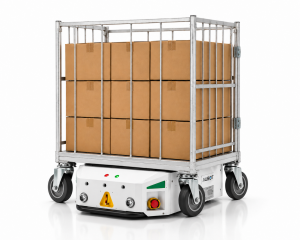
AUBOT AGV T500 for automated warehouse and internal logistics transport
5. Considerations When Selecting the AGV T500
✢ Before introducing the AGV T500 into a facility, businesses should evaluate the following factors:
- Towing load: Confirm that the total loaded cart weight does not exceed the 500 kg maximum towing capacity.
- Route guidance: Assess whether magnetic line navigation is suitable for the planned transport routes.
- Turning clearance: Check the available space against the robots 1 m turning radius and overall dimensions.
- Floor gradients: Compare the sites slopes with the specified maximum climbing gradient of 5°.
- Operating schedule: Determine whether the minimum eight-hour operating time per charge aligns with the intended workflow.
- Fleet coordination: Review whether FMS integration is needed to coordinate multiple AGVs and manage traffic along shared routes.
These checks help establish the technical requirements for an automated tugger system and determine whether the AGV T500 fits the facilitys material transport processes.
AUBOT – Automated Guided Vehicles and Industrial Robotics
Aubot Automation And Robotics Joint Stock Company provides automation and robotics solutions for industrial and logistics operations. Its AGV solutions support businesses evaluating automated material transport and the integration of robotic systems into internal workflows.
With the AGV T500, businesses can explore cart-towing automation for material replenishment, production logistics and warehouse transport. AUBOT serves markets including Vietnam, Southeast Asia and Japan.
Contact AUBOT for AGV T500 Solutions
Businesses planning to automate material cart transport can contact AUBOT to discuss the AGV T500s towing capacity, magnetic guidance routes, facility layout and potential fleet management integration. Sharing details about cart loads, transport distances, turning areas and operating schedules can help define the requirements for a suitable deployment plan.
Aubot Automation And Robotics Joint Stock Company