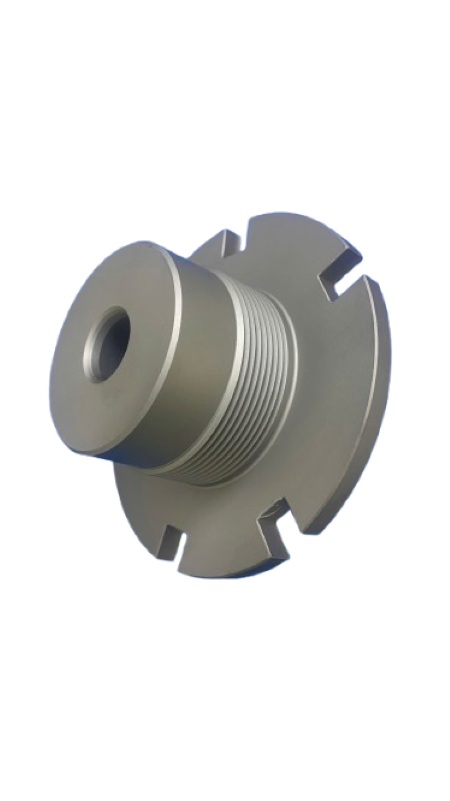
Carbonitriding
by Metal Heat Viet Nam - Metal Heat Vietnam., JSC — verified Vietnamese supplier
| Place of Origin | Vietnam |
| Brand Name | Metal Heat Vietnam |
| Supply Ability | Contact |
| Warranty | Contact |
| Main Market | Vietnam, FDI in Vietnam |


by Metal Heat Viet Nam - Metal Heat Vietnam., JSC — verified Vietnamese supplier
| Place of Origin | Vietnam |
| Brand Name | Metal Heat Vietnam |
| Supply Ability | Contact |
| Warranty | Contact |
| Main Market | Vietnam, FDI in Vietnam |
Carbonitriding is a thermochemical heat treatment process in which carbon (C) and nitrogen (N) are simultaneously diffused into the surface of steel while it is in the austenitic state.
It is a modified form of carburizing (carbon diffusion), with the addition of a nitrogen source (commonly from ammonia gas – NH₃) within the treatment atmosphere.
➡️ Purpose: to form a thin, hardened surface layer (0.07–1.25 mm) with high hardness and excellent wear resistance, while maintaining a tough and ductile core.
Basic Process
Treatment temperature: typically in the range of 750–880 °C (lower than Carburizing: 900–950 °C).
Diffusion atmosphere: a carbon-rich gas mixture (CO, CH₄, or modified natural gas) combined with NH₃ as the nitrogen source.
Diffusion mechanism:
Carbon diffuses into the austenite lattice → surface enrichment with carbon.
Nitrogen dissociates from NH₃ → atomic nitrogen diffuses simultaneously, partly dissolving in austenite, and partly forming nitrides/carbonitrides (Fe₃(C,N)).
Quenching: usually oil, water, or high-pressure gas quenching → transforms the C+N enriched austenite surface into supersaturated hard martensite.
Characteristics & Applications
Case characteristics:
Shallower case depth compared to carburizing (typically 0.1–1.25 mm).
High surface hardness (55–62 HRC), with improved tempering resistance.
Nitrogen addition enhances wear resistance, fatigue strength, and reduces distortion during quenching.
Advantages:
Shorter processing time compared to carburizing.
Minimal dimensional distortion.
Effective for low-carbon and low-alloy steels.
Lower cost compared to deep carburizing.
Limitations:
Thin case layer, not suitable for components requiring deep wear resistance.
More difficult to control case uniformity in complex-shaped parts.
Typical applications:
Small gears, shafts, pins, and bolts subjected to fatigue loading.
Automotive and motorcycle components (camshafts, piston pins, gears, shafts).
With a team of seasoned engineers, a production workshop equipped with state-of-the-art technology, and a profound sense of responsibility, Metal Heat consistently ensures and commits to delivering absolute trust to customers through products of the highest quality.
Get found by international buyers — list your business free in 2 minutes.
