HELIUM
General Properties:
Helium has the lowest boiling point of all elements and can only solidify under extremely high pressure. It typically exists as a monoatomic gas and is chemically inert.
It is the second most abundant element in the universe, after hydrogen. In the Earths atmosphere, the volumetric concentration of helium is 5.2 × 10⁻⁶ at sea level and increases with altitude up to about 24 km. This is primarily because most of the helium in the Earth’s atmosphere has escaped into outer space due to its low density and inertness. At an altitude of around 1,000 km, there is a layer in the atmosphere where helium becomes the predominant gas (although the overall pressure at this altitude is very low).
Helium is the 71st most abundant element in the Earth’s crust, where it occurs at a concentration of 8 × 10⁻⁹. It is even scarcer in seawater, at just 4 × 10⁻¹². Helium is generally produced from the radioactive decay of elements, so it can be found in mineral deposits containing uranium, thorium, etc., as well as in certain mineral waters and volcanic emissions. It also exists in various types of natural gas.
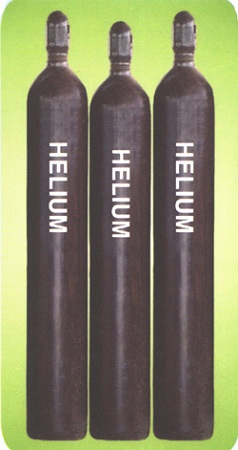
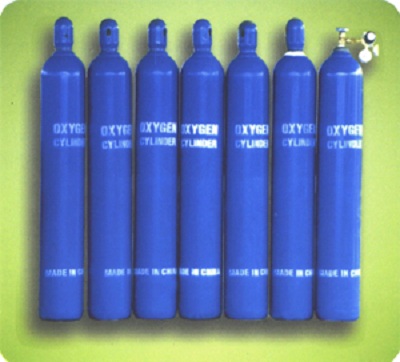
Gaseous Helium
- Filling Pressure: 150 kg/cm²
- Cylinder Capacity: 6 – 6.43 m³
Applications:
Helium is used to fill weather balloons and small airships due to its lower density compared to air, and it is also used as a cryogenic liquid for cooling superconducting magnets.
For more information, please contact Hai Tin Company!