TRUCK ACCUMULATORS AND BATTERIES
Although the electrical system makes up only about 20% of a truck’s overall structure, it plays a crucial role in ensuring the smooth operation of all components and machinery. At the heart of this system is the truck battery, responsible for supplying energy to keep the vehicle running efficiently. To drive safely and avoid unexpected battery failures, it is essential to understand your truck’s battery and choose a reliable supplier. Tan Đat Batteries is always a top choice for you.
What is a truck battery?
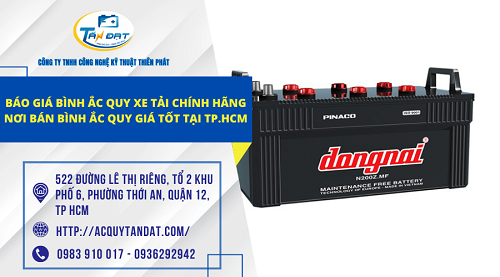
A truck battery is a rectangular box-shaped unit with two external terminals (positive and negative). Inside, it contains an electrolyte solution divided into multiple small compartments, along with components like lead plates, separators, and a cover.
The primary role of a truck battery is to provide the necessary power for engine startup and operation. Additionally, it supplies electricity to other vehicle systems, such as lighting and audio.
Types of Truck Batteries
Truck batteries are classified into two main types based on their internal composition:
-
Wet Cell Battery: Like conventional batteries, wet cell batteries contain multiple compartments, each holding lead plates immersed in a diluted sulfuric acid solution. This setup facilitates the conversion of chemical energy into electrical energy.
-
Dry Cell Battery: An upgraded version of the wet cell battery, the dry cell battery is completely sealed, with its electrolyte in gel form instead of liquid. This design offers improved durability and lower maintenance.
Key Specifications of Truck Batteries
-
Cold Cranking Amps (CCA): This refers to the amount of current a battery can deliver at extremely low temperatures (-17°C or 0°F) for a set period (usually 30 seconds). This specification is crucial since engine oil thickens in cold weather, making it harder for the engine to start.
-
Battery Capacity and Reserve Capacity (RC): Capacity, measured in ampere-hours (Ah), indicates how much energy a battery can store. RC represents how long the battery can continue supplying power under normal operating conditions.
-
Battery Charging: When a truck battery is drained, it can be recharged with a voltage of 14.5–15V over approximately 10 hours.
When Should You Replace a Truck Battery?
Over time, truck batteries wear out. Watch for these signs to determine when a replacement is necessary:
-
Battery Warning Light Illuminates: This dashboard light alerts the driver to potential battery issues. If it turns on, inspect the battery immediately or take the vehicle to a professional service center.
-
Engine Fails to Start, Lights Go Out: This is often due to a completely dead battery or an electrical system malfunction.
-
Battery Case is Deformed: If you notice swelling, dents, or deformation during routine checks, it may be caused by excessive engine heat or an expired battery lifespan. A replacement is necessary.
-
Difficulty Starting the Engine: If the engine takes longer than usual to start, sounds weak, or cranks intermittently, the battery may be losing its charge. Letting the engine run for about 20 minutes after starting can temporarily recharge the battery.
For high-quality truck batteries at competitive prices, contact us today!


.png)